
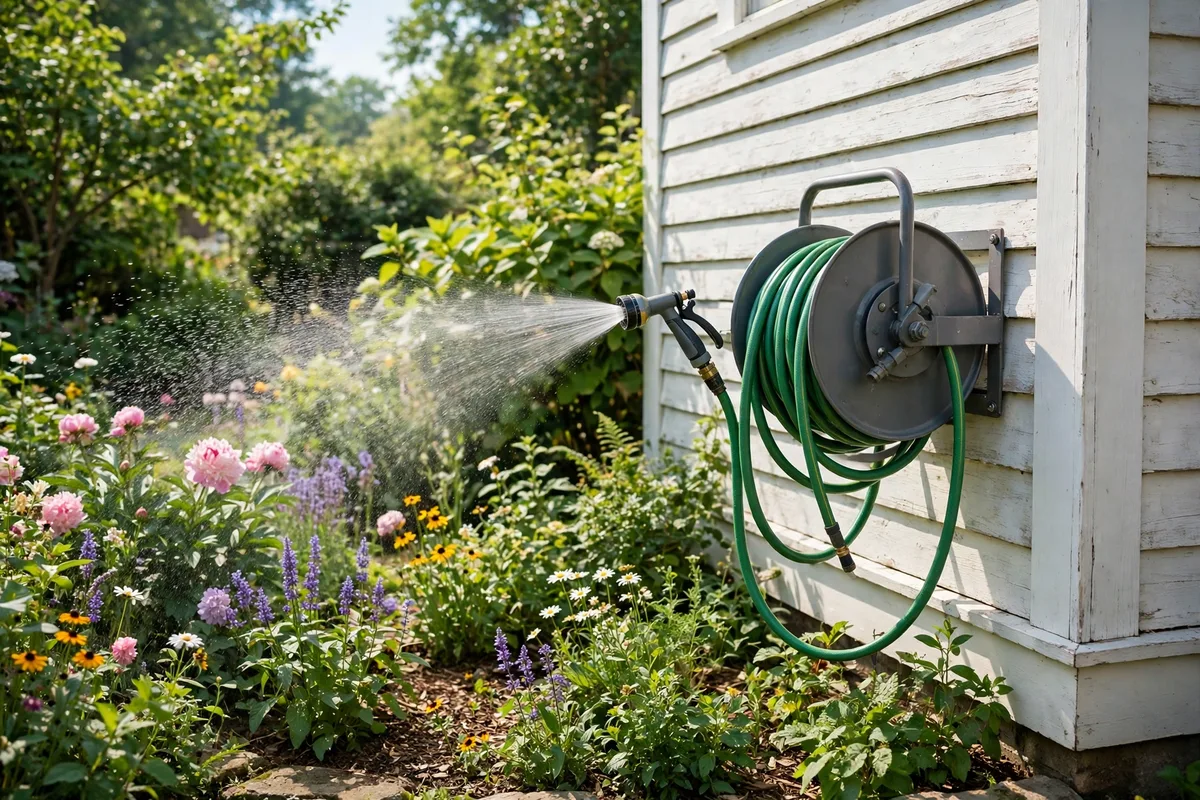
A garden hose is the most underrated tool in the yard — and the most annoying when it kinks, leaks, or weighs a ton. Our five picks cover the buy-it-for-life hybrid hose, a featherweight expandable, two stainless steel options for durability, and a pro-grade rubber workhorse — compared on kink resistance, fittings, weight, and honest longevity.
Last updated November 2026 — product details re-verified. We don’t publish live Amazon prices; check the current offer on the product page.
Quick Comparison
| Product | Best For | Key Spec | Price Tier |
|---|---|---|---|
| Flexzilla Garden Hose 5/8 in. x 50 ft (HFZG550YW) | Best overall | Hybrid polymer, drinking-water safe, kink-resistant | Mid |
| Flexi Hose Expandable Garden Hose 50 ft with 8-Function Nozzle | Best lightweight | Expandable fabric, 8-function nozzle included | Budget–mid |
| Bionic Steel 100 ft Stainless Steel Garden Hose (304 stainless, 500 PSI) | Most durable | 304 stainless steel, 500 PSI burst rating | Mid |
| TheFitLife Flexible Metal Garden Hose 100 ft (stainless steel) | Best value metal | Stainless steel, leak-resistant fittings | Budget–mid |
| Dramm ColorStorm Premium Rubber Hose 5/8 in. x 50 ft | Best rubber | Heavy-duty rubber, hot-water rated to 160°F | Mid |
Based on specifications, owner feedback and comparative research — not hands-on lab testing. Prices shift constantly; check the live price before you buy.
Best Overall: Flexzilla Garden Hose 5/8 in. x 50 ft (HFZG550YW)
The Flexzilla HFZG550YW is the canonical ‘buy it for life’ garden hose: a hybrid polymer that’s flexible in cold weather (where vinyl hoses turn into rigid nightmares), kink-resistant enough that you stop thinking about kinks, and drinking-water safe — a meaningful certification if the hose fills pet bowls or kiddie pools. The 5/8-inch diameter delivers full flow, and the 50-foot configuration is what most yards actually need.
The honest notes: hybrid polymer costs more than vinyl, putting it in the mid tier rather than budget. It’s lighter than rubber but not featherweight — the 50-footer has real heft when full. And while kink-resistant, it’s not kink-proof; no hose is. Some owners find the bright color divisive, though it does make the hose easy to spot before the mower finds it.
Who it’s for: anyone replacing a frustrating hose once and for all. If you’ve kinked, cursed, and replaced cheap hoses for years, this is the exit ramp.
Best Lightweight: Flexi Hose Expandable Garden Hose 50 ft with 8-Function Nozzle
Expandable hoses solve the weight problem completely: the Flexi Hose weighs a fraction of a rubber hose, expands to 50 feet under pressure, and shrinks back for storage in a fraction of the space. The heavy-duty fabric over a multi-layer latex core is the durability spec that separates decent expandables from the ones that burst in a season, and the included 8-function nozzle means you’re watering the day it arrives.
The category’s reputation is the caveat: expandable hoses as a class fail more often than traditional hoses — usually at the fittings or via inner-tube rupture — and the Flexi Hose is better than average, not immortal. They also need full water pressure to reach full length, can’t be left pressurized indefinitely, and must be drained before storage. Treat it as a lightweight convenience hose, not a lifetime tool.
Who it’s for: anyone who dreads dragging a heavy hose — small yards, balconies, older gardeners, RV use. Accept the shorter lifespan in exchange for the weight savings and it’s a genuine quality-of-life upgrade.
Most Durable: Bionic Steel 100 ft Stainless Steel Garden Hose (304 stainless, 500 PSI)
The Bionic Steel is the hose for hostile conditions: a 304 stainless steel outer that shrugs off pet chewing, dragging across concrete, and being run over — the three killers of ordinary hoses. The 500 PSI burst rating is multiples of household water pressure, and at 100 feet it reaches the far corners of big yards. For dog owners whose pets treat hoses as chew toys, this is the only rational choice.
Metal hoses have their own quirks: they’re heavier than they look, the corrugated steel can kink if you force a tight bend (and a kinked metal hose is harder to straighten than rubber), and the 100-foot length is overkill for small yards — don’t buy length you won’t use. The fittings are solid but check them seasonally; metal-on-metal threads reward a bit of thread tape.
Who it’s for: pet owners, rough terrain, and anyone who’s destroyed multiple hoses. It’s the ‘last hose’ for abusive conditions.
Best Value Metal: TheFitLife Flexible Metal Garden Hose 100 ft (stainless steel)
The TheFitLife is the value entry into metal hoses: stainless steel construction with leak-resistant fittings at a budget–mid price that undercuts the premium metal options. You get the core metal-hose benefits — chew resistance, crush resistance, no kinking in the traditional sense — for close to what a good rubber hose costs. For buyers curious about metal but not ready for the premium tier, it’s the low-risk experiment.
The price gap versus premium metal hoses shows up in fit and finish: fittings are good but not great, and long-term corrosion resistance of the hardware is the open question — stainless hose with lesser fittings is a common weak point. As with all metal hoses, avoid tight bends and don’t buy 100 feet for a 30-foot yard.
Who it’s for: value shoppers who want metal-hose durability without the premium price. A smart buy for first-time metal hose users.
Best Rubber: Dramm ColorStorm Premium Rubber Hose 5/8 in. x 50 ft
The Dramm ColorStorm is the pro-gardener’s hose: heavy-duty rubber that stays flexible in cold, resists kinking better than vinyl, and is rated for hot water to 160°F — a rare spec that matters for greenhouse and cleanup work. Dramm is a commercial nursery brand, and it shows in the construction: this is the hose that lives on a commercial hose reel for years. The colors are a bonus — visible, cheerful, and easy to find in the garden.
Rubber’s downsides: it’s the heaviest hose material here — the 50-footer is a workout when full. Rubber also has a distinct smell when new (it fades) and isn’t drinking-water safe, so keep it away from pet bowls. The mid-tier price reflects commercial build, not consumer frills.
Who it’s for: serious gardeners and anyone who uses a hose daily. If your hose is a tool rather than an accessory, rubber is still the professional’s choice.
Garden Hose Buying Guide
Material determines everything. Rubber is the professional standard: heavy, durable, kink-resistant, cold-flexible — and heavy. Hybrid polymer (Flexzilla) splits the difference: lighter than rubber, tougher than vinyl, flexible in cold. Vinyl is cheap and light but kinks relentlessly and stiffens in cold — fine for occasional light use, miserable as a daily driver. Stainless steel is the durability outlier: chew-proof and crush-proof but with its own handling quirks. Expandable fabric is the weight champion with the shortest lifespan.
Diameter and length are the performance specs. 5/8 inch is the standard diameter — full flow for sprinklers and nozzles; 1/2 inch is lighter and fine for hand-watering but chokes high-demand attachments. For length, buy what you need plus a little: every extra 25 feet drops pressure slightly and adds weight and storage hassle. A 50-foot hose covers most suburban yards; 100 feet is for large lots.
Fittings are where cheap hoses die. Solid brass fittings are the gold standard — corrosion-resistant and durable; aluminum is lighter but corrodes and can seize onto spigots (use thread tape and don’t overtighten). Look for crush-proof couplings and a comfortable grip. Whatever you buy, disconnect and drain before winter: trapped water freezes, expands, and splits even good hoses — indoor storage is ideal, a drained coil in the garage is fine.
How we chose these: our recommendations come from published specifications, aggregated owner reviews, and comparative research across current review roundups — not hands-on lab testing. We haven’t pressure-tested all five in a backyard. What we can tell you is which materials actually last, which failure modes repeat across hundreds of owners, and which price tiers buy real durability versus marketing. Tiers are relative, not quotes — check the live price before you buy.
Frequently Asked Questions
What size garden hose do I need?
For most suburban yards, 5/8-inch diameter by 50 feet is the sweet spot — full flow with manageable weight. Go 100 feet only if your spigot genuinely can’t reach the far beds; longer hoses lose pressure and are heavier to drag. Measure your farthest watering point from the spigot before buying.
Are expandable hoses worth it?
For the right user, yes. They’re dramatically lighter and store tiny, which matters for small yards, balconies, RVs, and anyone who struggles with hose weight. But they have shorter lifespans than rubber or hybrid hoses, need full pressure to extend, and must be drained after use. Buy one for convenience, not longevity.
Why does my hose kink, and how do I stop it?
Kinking happens when a hose twists under pressure — vinyl is worst, rubber and hybrid polymer resist it best. Prevention: uncoil the full hose before turning on the water, avoid sharp bends, and store on a reel rather than in a pile. A kink-resistant hose plus good habits eliminates most of the frustration.
Can I leave my garden hose outside in winter?
Not with water in it. Freezing water expands and splits hoses, damages spigots, and can burst interior pipes. Disconnect, drain fully (elevate one end and walk the length), coil loosely, and store indoors or in a garage. In mild climates a drained hose on a reel survives winter fine.
Are stainless steel hoses better than rubber?
Different, not better. Stainless wins on chew resistance, crush resistance, and puncture protection — unbeatable for pet owners and rough use. Rubber wins on flexibility, kink recovery, and feel in the hand. Choose stainless for hostile conditions, rubber (or hybrid polymer) for everyday gardening comfort.