
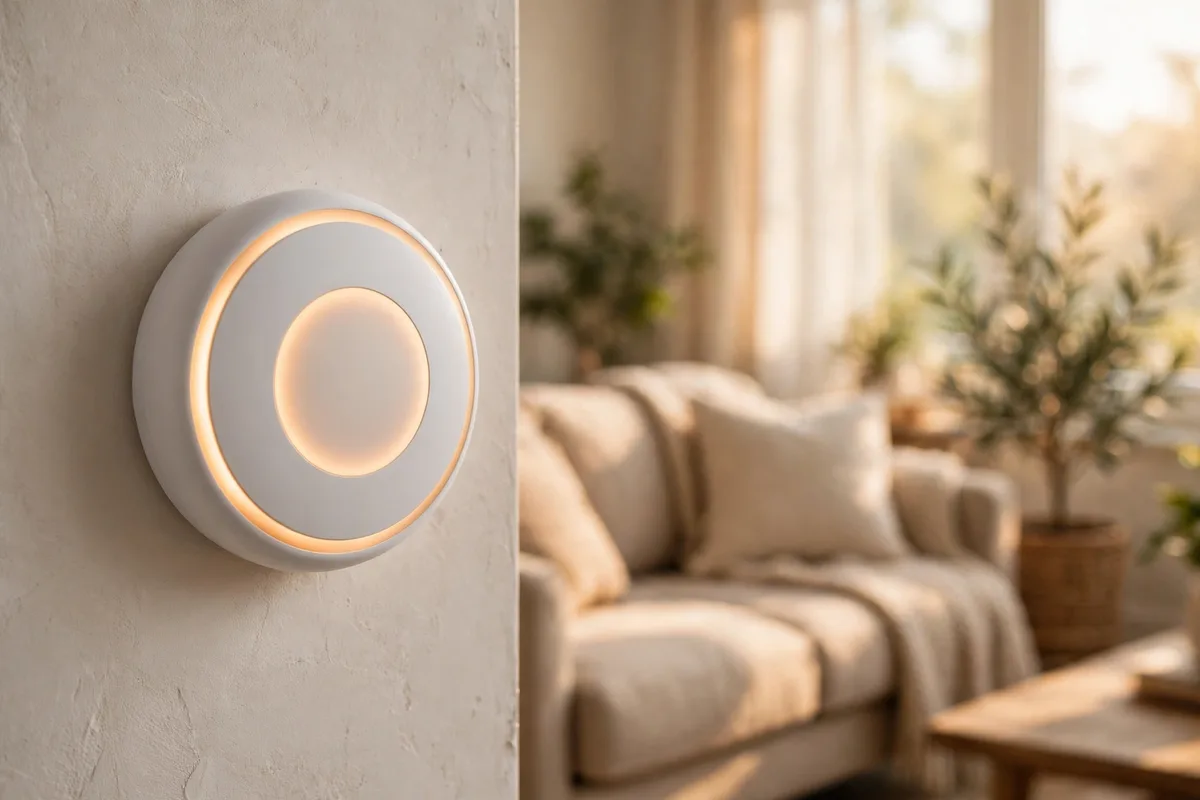
The single biggest installation gotcha in this category isn’t the app or the learning algorithm — it’s the C-wire. Get the wiring wrong and your new thermostat is a paperweight. Our research compared the five leading smart thermostats — Google Nest, ecobee, Honeywell Home, Emerson Sensi, and Amazon — on learning smarts, sensor support, ecosystem fit, and exactly what each one demands behind your wall plate.
Based on specifications, owner feedback and comparative research, the five picks below cover every thermostat scenario — from the true learning champion to the cheapest credible option. Building out your smart home? See our best video doorbells and best security cameras, and our smart plugs guide.
Last updated November 2026 — product details and plan pricing re-verified. We don’t publish live Amazon prices; check the current offer on the product page.
Quick Comparison: The 5 Best Smart Thermostats
| Model | Standout feature | Best for | Price tier |
|---|---|---|---|
| ecobee Smart Thermostat Premium | Sensor + extender kit + Alexa in box | Best overall | Premium |
| Google Nest Learning Thermostat (4th Gen) | Truly learns your schedule | Best learning | Premium |
| Honeywell Home T9 | Dehumidify mode + humidity sensors | Best for humidity | Mid-range |
| Emerson Sensi Touch 2 | Big 4.3″ touchscreen for less than the flagships | Best touchscreen value | Mid-range |
| Amazon Smart Thermostat | Lowest-priced option from a major brand | Best budget | Budget |
Based on specifications, owner feedback and comparative research — not hands-on lab testing. Prices shift constantly; check the live price before you buy. Vendor savings figures are vendor claims, not independent measurements.
Best Overall: ecobee Smart Thermostat Premium
The most complete box in the category: a SmartSensor, a power extender kit (so no C-wire needed), and a trim plate all included — plus a built-in Alexa speaker and an air-quality monitor (VOCs, CO₂, humidity) on the device itself. Deep HVAC controls make it the best choice for demanding heat-pump setups, and it speaks to the broadest range of smart-home platforms: HomeKit, Alexa, Google, and SmartThings. The 3-year warranty is the longest here.
The honest notes: it’s the most expensive pick at list price, there’s no Matter support as of current listings, and it doesn’t truly auto-learn schedules — you’re doing manual scheduling with smart recommendations. You pay for the Alexa speaker and air-quality extras whether you want them or not.
Who should NOT buy it: set-and-forget buyers who want true auto-learning, or anyone who won’t use the extras.
Pros
- Most complete package — sensor, extender kit, trim plate in the box
- Deepest HVAC controls for heat-pump homes
- Broadest ecosystem: HomeKit, Alexa, Google, SmartThings
- 3-year warranty — longest here
Cons
- Most expensive pick at list price
- No Matter support as of current listings
- Doesn’t truly auto-learn schedules
| Attribute | Score /10 | Note |
|---|---|---|
| Performance | 9 | Excellent control; deep HVAC settings |
| Value | 7 | Premium price, but everything’s included |
| Features | 10 | Sensor, Alexa, air quality — most complete |
| Ease of use | 8 | PEK simplifies install; good app |
| Build quality | 9 | Premium build; 3-year warranty |
| Maintenance | 8 | Reliable; software-supported |
| PickWorthIt Score | 8.4 | Weighted total — see how we score |
We may earn a commission if you buy through this link — at no extra cost to you.
Best Learning: Google Nest Learning Thermostat (4th Gen)
The only thermostat here that genuinely learns. Instead of making you program a schedule, it watches your adjustments for a week or two and builds a Smart Schedule from your actual habits, with Adaptive Eco setback based on outdoor temperature. Power Sharing means most homes don’t need a C-wire at all, and the 4th-gen design — aluminum build, large Dynamic Farsight display, included temperature sensor — is the best-looking thermostat on this list.
The caveats: the 4th-gen backplate doesn’t fit 3rd-gen Nest mounts (replacing an older Nest may mean patching the wall), edge-case C-wire-less setups can trigger setup errors, and ENERGY STAR/rebate eligibility is murky across sources — verify before counting on rebates.
Who should NOT buy it: buyers counting on utility rebates without verifying, or complex HVAC setups needing deep controls.
Pros
- Best-in-class learning — builds a schedule from your habits
- Power Sharing: no C-wire needed in most homes
- Premium design; large display; sensor included
Cons
- 4th-gen backplate doesn’t fit 3rd-gen mounts
- Edge-case C-wire-less setups can error
- ENERGY STAR/rebate eligibility murky — verify first
| Attribute | Score /10 | Note |
|---|---|---|
| Performance | 9 | Genuine learning; accurate scheduling |
| Value | 7 | Premium price; rebates uncertain |
| Features | 8 | Learning, Matter, sensor included |
| Ease of use | 9 | Set-and-forget; easiest premium install |
| Build quality | 9 | Aluminum; premium feel |
| Maintenance | 7 | Reliable; occasional edge-case issues |
| PickWorthIt Score | 8.2 | Weighted total — see how we score |
We may earn a commission if you buy through this link — at no extra cost to you.
Best for Humidity: Honeywell Home T9
Backed by a century of HVAC credibility and built for one job the flagships underplay: humidity. A dedicated dehumidify mode plus humidity-sensing room sensors (200 ft range) make it the pick for humid climates, and a room sensor plus C-wire adapter come in the box at a mid-tier price. ENERGY STAR certified with strong utility-rebate eligibility.
The Resideo app experience is widely described as dated — this is the HVAC expert’s pick, not the tech enthusiast’s — and the C-wire is required as baseline even with the included adapter. It also can’t control individual vents.
Who should NOT buy it: buyers who prioritize app experience and learning over humidity control.
Pros
- Best humidity control — dehumidify mode + humidity-sensing sensors
- Room sensor included at a mid-tier price; 200 ft range
- ENERGY STAR; strong rebate eligibility; adapter in box
Cons
- C-wire required as baseline — fussiest install here
- No individual vent control
- Dated app UX vs. Nest/ecobee
| Attribute | Score /10 | Note |
|---|---|---|
| Performance | 8 | Strong control; humidity edge |
| Value | 8 | Sensor + adapter at mid-tier price |
| Features | 8 | Dehumidify mode; room sensors |
| Ease of use | 7 | Dated app; wiring demands |
| Build quality | 8 | Honeywell HVAC pedigree |
| Maintenance | 7 | Reliable; sensor batteries |
| PickWorthIt Score | 7.8 | Weighted total — see how we score |
We may earn a commission if you buy through this link — at no extra cost to you.
Best Touchscreen Value: Emerson Sensi Touch 2
A big, bright 4.3″ touchscreen — the easiest on-device interface in this roundup, great for non-techy household members — with a premium feel well below the flagships. The privacy pledge and top-rated mobile app are genuine differentiators. (Note: Sensi is now manufactured by Copeland following a brand transition.)
But the C-wire story is the worst here: required, with the adapter sold separately. No humidifier accessory support, occasional app connectivity complaints, and room sensors are supported but not included.
Who should NOT buy it: homes without a C-wire (the adapter math kills the value), or humidity-control buyers.
Pros
- Big, simple 4.3″ touchscreen — easiest on-device interface
- Premium feel at a mid-range price
- Privacy pledge; top-rated mobile app
Cons
- C-wire required AND adapter sold separately
- No humidifier/dehumidifier accessory support
- Occasional app connectivity issues; sensors not included
| Attribute | Score /10 | Note |
|---|---|---|
| Performance | 7 | Solid control; no learning |
| Value | 8 | Great street price; adapter costs extra |
| Features | 7 | Geofencing; sensor support (extra) |
| Ease of use | 8 | Best on-device interface |
| Build quality | 7 | Good; thinnest in class |
| Maintenance | 7 | Reliable; app hiccups reported |
| PickWorthIt Score | 7.4 | Weighted total — see how we score |
We may earn a commission if you buy through this link — at no extra cost to you.
Best Budget: Amazon Smart Thermostat
The cheapest smart thermostat from a major brand — with real Honeywell/Resideo HVAC engineering behind it and seamless Alexa/Ring integration. But the constraints are hard: C-wire is a hard requirement with no adapter in the box, it’s Alexa-only (no Google, no HomeKit), and there are no room sensors and no learning. This is a smart-ish programmable thermostat, not a flagship.
Buy it only with a confirmed C-wire and an Echo in the house.
Who should NOT buy it: anyone without a C-wire, or Google Home / HomeKit households.
Pros
- Cheapest credible smart thermostat — frequently the cheapest here
- Honeywell/Resideo engineering — reliable basics
- Seamless Alexa/Ring integration
Cons
- C-wire HARD requirement, no adapter in box
- Alexa-only — no Google Home, no HomeKit
- No room sensors, no learning, basic display
| Attribute | Score /10 | Note |
|---|---|---|
| Performance | 6 | Basic control; no learning |
| Value | 9 | Cheapest credible option |
| Features | 5 | Presets only; no sensors |
| Ease of use | 7 | Simple; Alexa setup |
| Build quality | 6 | Basic but solid |
| Maintenance | 7 | Reliable basics |
| PickWorthIt Score | 6.8 | Weighted total — see how we score |
We may earn a commission if you buy through this link — at no extra cost to you.
Smart Thermostat Buying Guide
The C-wire question comes first. The C-wire (common wire) provides continuous power to the thermostat, and many older homes don’t have one. Before buying anything: pull your current thermostat off the wall and look for a wire labeled C. Nest usually works without one (Power Sharing), ecobee includes a power extender kit, Honeywell includes an adapter, Sensi sells one separately, and Amazon’s budget model simply demands one. This single check determines your whole shortlist.
Learning vs. scheduling. Only Nest truly learns — it builds a schedule from your behavior. Ecobee and Honeywell learn preferences and recommend adjustments but expect you to set schedules. Sensi uses geofencing plus custom schedules. Amazon uses four fixed presets. If “set it and forget it” is the dream, Nest is the only one that actually delivers it.
Room sensors fix hot and cold spots. A single thermostat measures one hallway. Room sensors (included with Nest 4th gen, ecobee Premium, and Honeywell T9; supported but not included on Sensi; absent on Amazon) let the system average temperatures across rooms or prioritize the room you’re actually in. For multi-story homes, this matters more than any learning algorithm.
Ecosystem and rebates. Match the thermostat to your smart home: ecobee covers everything (including HomeKit), Nest covers Google/Alexa/Matter, Sensi covers Alexa/HomeKit, Amazon is Alexa-only. Then check your utility’s rebate program — many utilities offer $50–$150 back on ENERGY STAR models, which can make a flagship cheaper than a budget pick.
How we picked these five
We compared currently-sold smart thermostats on learning capability, C-wire requirements, room-sensor support, ecosystem compatibility, and value — drawing on manufacturer specifications, third-party reviewer findings, and owner-feedback patterns. Every pick has stated weaknesses. Vendor savings claims (ecobee 26%, Nest 31%) are vendor claims, not independent measurements. Nest 4th gen ENERGY STAR status is conflicting across sources — we do not claim certification; verify rebate eligibility with your utility.
Frequently Asked Questions
What is a C-wire and do I need one?
A C-wire (common wire) provides continuous 24V power to a smart thermostat. Whether you need one depends on the model: Nest usually works without one, ecobee includes a power extender kit, Honeywell includes an adapter, Sensi sells one separately, and Amazon’s budget thermostat requires one outright. Check behind your current thermostat before buying.
Do smart thermostats really save money?
Vendors claim 23–31% HVAC savings, but these are vendor claims, not independent measurements. Real savings come from setback schedules (lowering heat/cool when you’re away or asleep) and fixing waste — which any programmable thermostat can do. The smart part is that these do it automatically. Pair with our smart lights guide for whole-home automation savings.
Can I install a smart thermostat myself?
Most homeowners can, in 30–60 minutes, if the wiring is compatible — the apps walk you through it with photo guidance. The exceptions: no C-wire (depending on model), high-voltage baseboard systems (none of these support them), and complex multi-stage setups, which merit a pro.
Which smart thermostat works without a C-wire?
The Google Nest Learning Thermostat works in most homes without a C-wire thanks to Power Sharing, and the ecobee Smart Thermostat Premium includes a power extender kit that eliminates the need. Honeywell includes an adapter; Sensi and Amazon require a C-wire (or adapter).
Our recommendation: most buyers should get the ecobee Smart Thermostat Premium — the most complete package with the broadest compatibility, ideal for complex homes. Buyers who want the thermostat to learn their routine with the easiest install should take the Google Nest Learning Thermostat. Humid-climate homes get the Honeywell T9. Check your C-wire before anything else, then check your utility’s rebate page — it can change the math completely.